AI Medical Transcription for Healthcare Professionals
Turn patient consultations, follow-up visits, and clinical conversations into structured transcripts, visit summaries, key notes, and searchable medical records.
 Rated 4.7/5 5/5
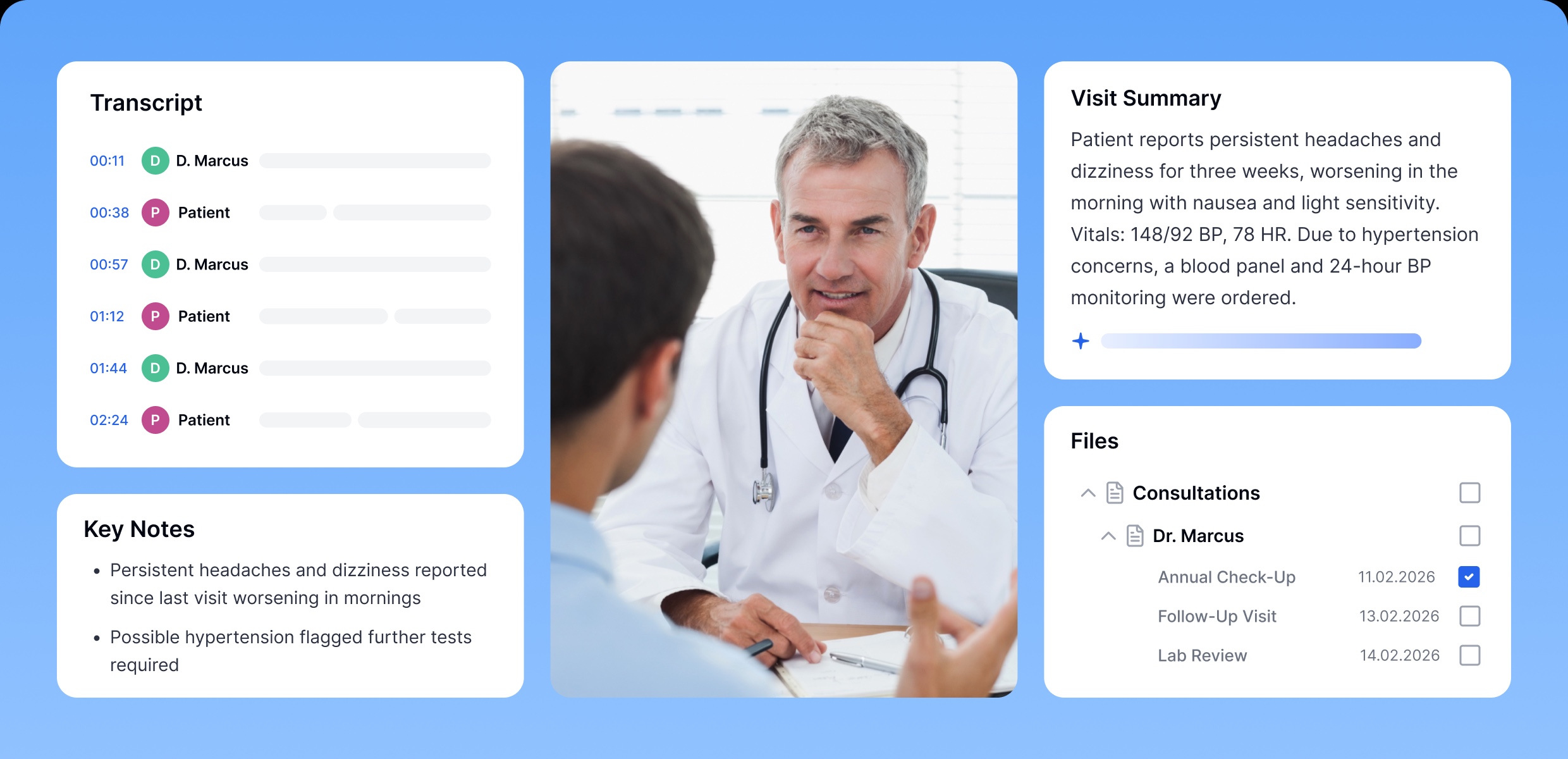
Reduce Documentation Burden
Create accurate, structured clinical documentation and actionable insight without manual note-taking or after-hours charting.
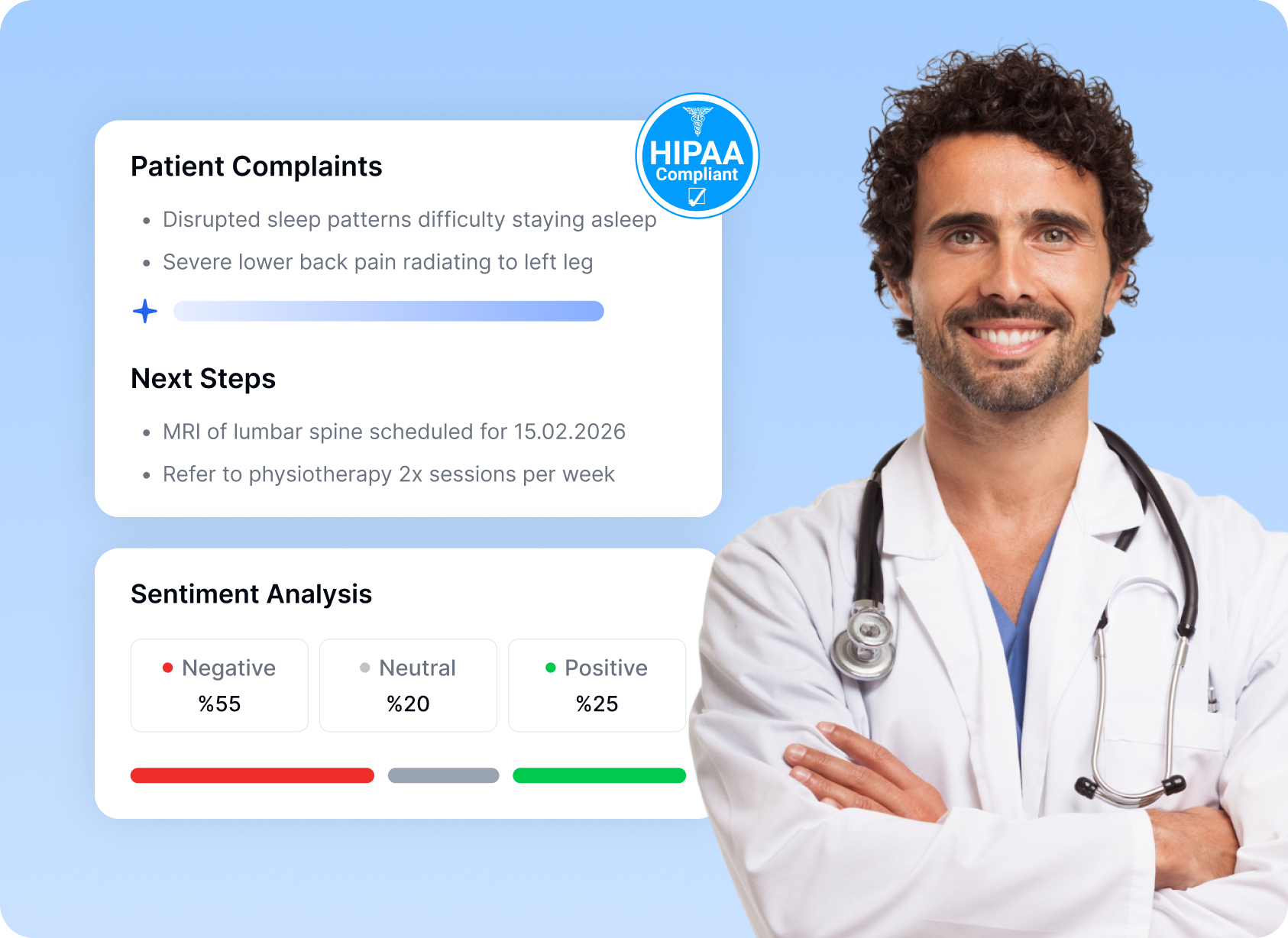
Inform Clinical Decisions with Patient Conversation Intelligence
Structure patient conversations into actionable clinical insight that improves care decisions, coordination, and documentation efficiency.
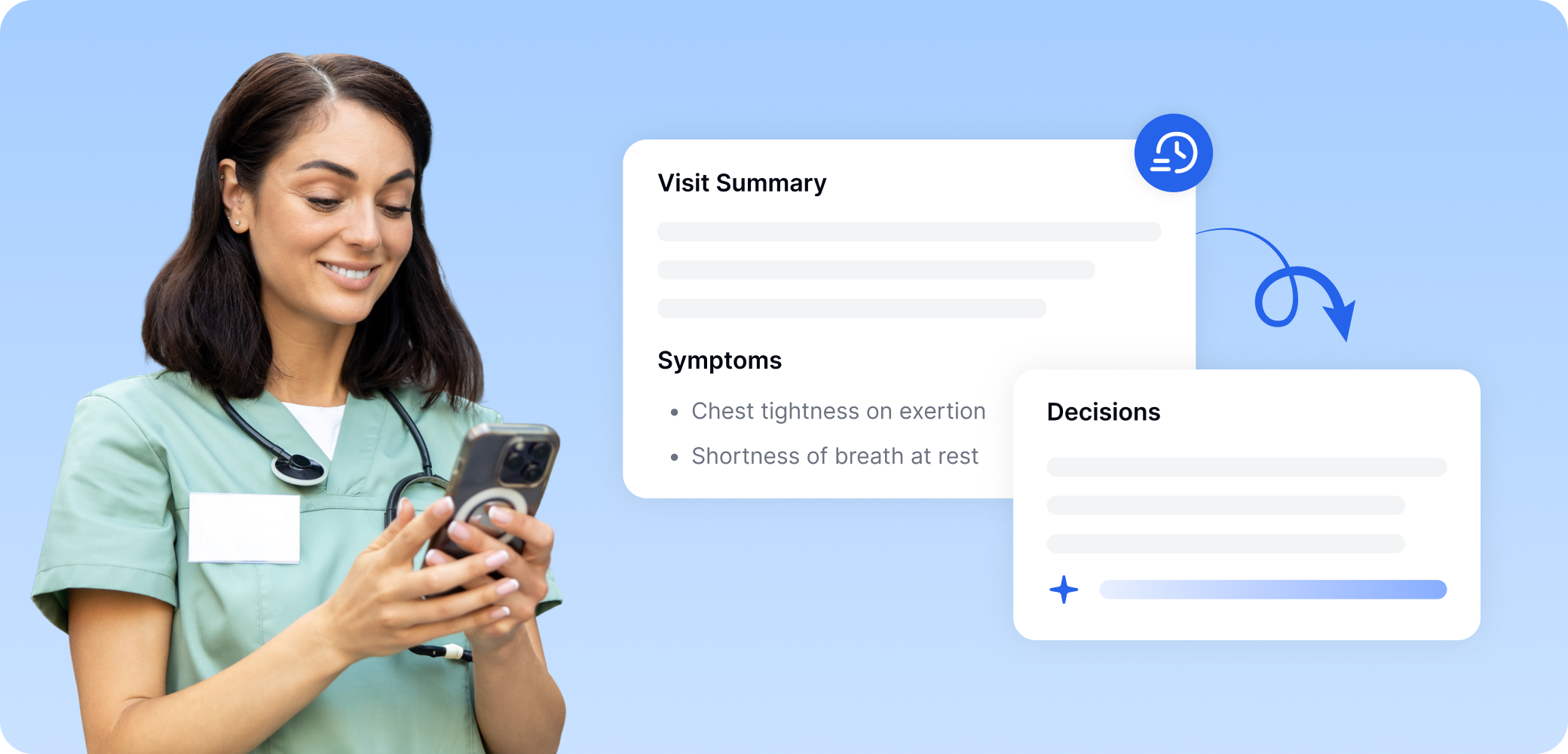
Stay Present During Visits
Clarify facts immediately using verified statements instead of replaying hours of recordings.
Clarify Care Decisions
Rely on verbatim transcripts to confirm claims and build coherent, defensible narratives.
Finish Charting on Time
Eliminate after-hours charting by completing documentation before the next appointment.
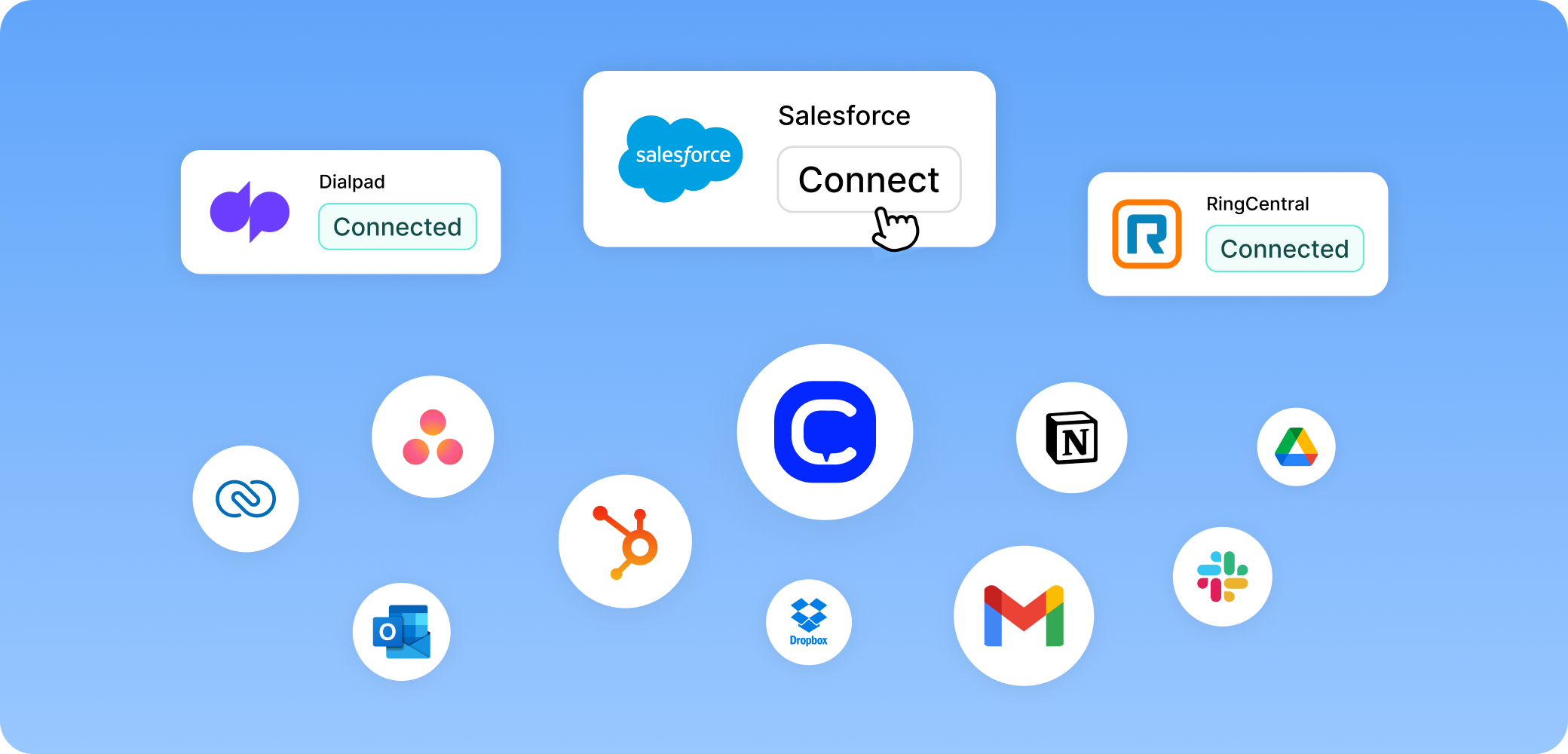
Integrate Transkriptor into Your Clinical Workflow
Connect HIPAA-aligned patient conversation intelligence to the systems your teams already use.


EHR Systems
Send structured visit notes into EHR systems via API.



Telehealth
Record and transcribe telehealth calls automatically from Zoom, Teams, Meet, CloudTalk, Dialpad, and more.



Productivity
Distribute summaries and follow-ups across Slack, Gmail, Outlook, Notion, Asana, and other team tools.
Enterprise-Ready Security & Compliance
Transkriptor keeps clinical conversations protected using HIPAA-aligned security, encryption, and granular controls.


Hear it From Our Users
Transkriptor cut my documentation workload in half. I now walk out of the clinic on time because my visit notes are complete before the next patient arrives.

Sarah Jenkins
Primary Care Physician
Frequently Asked Questions
AI medical transcription converts doctor-patient conversations into searchable text, structured notes, and clinical summaries for faster documentation.
It records the medical conversation, separates speakers, transcribes the discussion, and turns it into organized clinical documentation.
Doctors, clinics, hospitals, private practices, therapists, nurses, and other healthcare teams can use it to reduce documentation work.
It can be used for consultations, follow-up visits, intake calls, virtual care sessions, treatment discussions, and clinical team meetings.
It reduces manual note-taking, preserves clinical context, improves documentation speed, and helps providers stay focused on patient care.
AI medical transcription is built for healthcare workflows, where clinical structure, patient context, and secure data handling matter more.